What to measure
How to use the plant spacing calculator
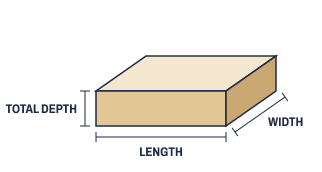
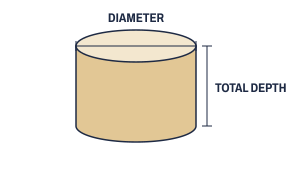
Measure the bed as a rectangle or circle and enter the spacing from the plant tag. Staggered rows are the default because plants fill in evenly; pick a square grid for vegetables or anything you’ll plant in straight rows. Add the price per plant to see the cost. For the mulch to go around them, use the mulch calculator.
The formulas
- Square grid: plants = area ÷ spacing²
- Staggered rows: plants = area ÷ (spacing² × 0.866), with rows 0.866 × spacing apart
Spacing goes in feet: 12 in = 1 ft, 9 in = 0.75 ft, 18 in = 1.5 ft. The 0.866 is √3 ÷ 2, the height of the equilateral triangle that three neighboring plants make.
Worked example: a 10 × 10 ft bed at 12 in spacing
- 10 × 10 = 100 sq ft; 12 in = 1 ft
- Square grid: 100 ÷ 1² = 100 plants
- Staggered: 100 ÷ (1² × 0.866) = 115.5 → 116 plants, rows 10 3/8 in apart
- At $3 a plant, staggered: $348.00
Plants per 100 sq ft
| Spacing | Square grid | Staggered | Per sq ft (staggered) |
|---|---|---|---|
| 6 in | 400 | 462 | 4.62 |
| 8 in | 225 | 260 | 2.6 |
| 9 in | 178 | 206 | 2.05 |
| 12 in | 100 | 116 | 1.15 |
| 18 in | 45 | 52 | 0.51 |
| 24 in | 25 | 29 | 0.29 |
| 36 in | 12 | 13 | 0.13 |
The square-grid column matches the University of Illinois Extension groundcover chart. For other areas, scale the numbers: 250 sq ft at 12 in staggered is 2.5 × 115.5 = 289 plants.
Common mistakes
- Using the square-grid count for staggered rows. Staggered planting takes about 15% more plants for the same bed.
- Measuring spacing edge to edge. Plant tags give center-to-center spacing, from the middle of one plant to the middle of the next.
- Planting too close to save waiting. Crowded plants compete for water and light and need thinning later; the tag spacing is already the grown width.
- Counting the whole yard. Measure only the beds you’ll plant, and subtract paths, stepping stones and existing shrubs.
Frequently asked questions
How many plants do I need for 100 square feet?
At 12 in spacing, 100 plants in a square grid or 116 in staggered rows. At 18 in it's 45 or 52, and at 9 in it's 178 or 206.
Is staggered or square planting better?
Staggered (triangular) rows put every plant the same distance from its neighbors, so they fill in evenly with no open diamonds between them. Illinois Extension recommends a staggered or diamond pattern for groundcovers. It takes about 15% more plants than a square grid.
How do I lay out staggered rows?
Set the rows 0.866 × the spacing apart and shift every other row by half a space. For 12 in spacing, rows are 10 3/8 in apart and plants in alternate rows start 6 in in.
How many plants per square foot?
At 12 in spacing, 1 in a square grid or 1.15 staggered. At 6 in, 4 or 4.62; at 18 in, 0.44 or 0.51.
What spacing should I use?
The spacing on the plant tag, which is about the plant's width when grown. Closer spacing covers the ground sooner but costs more; Illinois Extension notes that faster-growing groundcovers can go further apart than slow ones.
Does the count include the edges?
It divides the area by the space each plant needs, which is how nurseries and extension tables count. Along a straight edge you may fit one more or one fewer per row, so round up a flat if you're close.
Sources
Formulas and defaults last reviewed October 30, 2026. How we check our math.