What to measure
How to use the gravel calculator
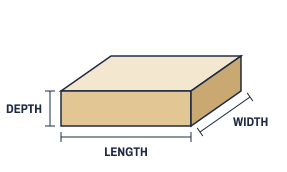
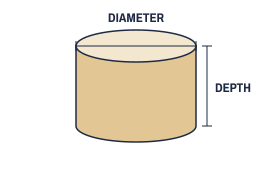
- Pick a rectangle or a circle and enter the size.
- Enter the depth — 3 inches is the default for paths and beds.
- Choose the material; the density changes the tonnage.
- Optional: enter the price per ton from your supplier.
The formula
- Cubic yards = length × width × depth (all in feet) ÷ 27
- Tons = cubic yards × density (1.4 t/yd³ for gravel)
Worked example: 10 × 10 ft path area, 3 in deep
- 10 × 10 × (3 ÷ 12) = 25 cu ft = 0.93 cubic yards
- 0.93 × 1.4 = 1.3 tons of gravel (about 2,593 lb)
- Crushed stone instead: 0.93 × 1.35 = 1.25 tons — at $40 a ton, $50
Gravel densities we use
| Material | Tons per cubic yard |
|---|---|
| Gravel (mixed) | 1.4 |
| Pea gravel | 1.4 |
| Crushed stone | 1.35 |
| River rock | 1.35 |
Compacted gravel settles: for a driveway base that will be compacted, add about 10–15% to the result.
Gravel per 100 square feet by depth
For a 10 × 10 ft area. Volume is the same for every stone; only the weight changes.
| Depth | Cubic yards | Gravel (tons) | Crushed stone (tons) |
|---|---|---|---|
| 2 in | 0.62 | 0.86 | 0.83 |
| 3 in | 0.93 | 1.3 | 1.25 |
| 4 in | 1.23 | 1.73 | 1.67 |
| 6 in | 1.85 | 2.59 | 2.5 |
| 8 in | 2.47 | 3.46 | 3.33 |
| 12 in | 3.7 | 5.19 | 5 |
For a bigger area, multiply by the number of hundreds of square feet: a 1,000 sq ft area is ten times the row.
Common mistakes
- Mixing inches and feet. Depth is usually measured in inches but the volume formula needs feet. Divide inches by 12 first, or let the calculator convert.
- Ordering for the loose depth on a compacted base. A driveway or paver base shrinks when it’s compacted, so add the extra noted above rather than ordering the finished depth.
- Comparing a per-ton price with a per-yard price. Convert one to the other with the density before you pick a supplier.
- Skipping the edging. Without a border, gravel spreads into the lawn and the layer thins out, so you end up buying more.
Frequently asked questions
How much does a cubic yard of gravel weigh?
About 1.4 tons (2,800 lb) for typical mixed gravel and pea gravel, and about 1.35 tons for crushed stone and river rock. Moisture and stone size change this, so use your quarry's figure if they give one.
How deep should gravel be?
2–3 inches for paths and decorative beds, 4 inches as a base under pavers or a slab, and 4–6 inches (often in layers) for a driveway.
How much gravel do I need for a driveway?
Multiply length × width × depth. A 12 × 50 ft driveway at 4 inches is 200 cu ft = 7.4 cubic yards ≈ 10.4 tons of gravel. Enter your own size above.
Is gravel sold by the ton or the yard?
Both — quarries usually sell by the ton, landscape yards often by the cubic yard. The calculator shows both so you can compare prices.
How much crushed stone do I need for a patio base?
A 10 × 20 ft patio with a 4 inch base needs 66.7 cu ft, which is 2.47 cubic yards or about 3.3 tons of crushed stone. Choose Crushed stone as the material above for the exact figure.
How much gravel do I need for a 12 × 50 ft driveway 6 inches deep?
300 cu ft, which is 11.11 cubic yards or about 15.56 tons of mixed gravel. Driveways are often built in two or three layers, so you can also run each layer's depth separately.
How much gravel for a 3 ft wide garden path?
A 3 × 30 ft path at 3 inches needs 22.5 cu ft, or 0.83 cubic yards, about 1.17 tons. Measure the path's length along its center line if it curves.
Why does crushed stone come out lighter than gravel in the calculator?
We use 1.35 tons per cubic yard for crushed stone and 1.4 for mixed gravel, so the same volume weighs a little less. The cubic yards are the same; only the tonnage changes.
Sources
Formulas and defaults last reviewed October 30, 2026. How we check our math.