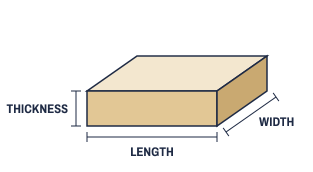
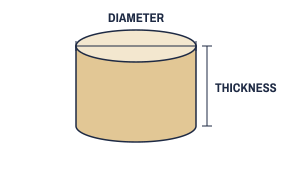
What to measure
How to use the cement calculator
- Enter the size of the slab or pad and its thickness.
- Pick a mix ratio — 1:2:3 for most outdoor slabs.
- Keep 10% for waste.
You’ll get the number of 94 lb bags of Portland cement, the sand and gravel volumes in cubic feet and yards, and an approximate amount of water.
The formula
- Dry volume = finished volume × 1.54
- Split it by the ratio. For 1:2:3 there are 6 parts: cement = 1/6, sand = 2/6, gravel = 3/6.
- Bags of cement = cement volume (cu ft) ÷ 1, since a 94 lb bag is one cubic foot.
Worked example: 10 × 10 ft slab, 4 in thick, 1:2:3
- 10 × 10 × (4 ÷ 12) = 33.33 cu ft, plus 10% = 36.67 cu ft
- Dry volume: 36.67 × 1.54 = 56.47 cu ft; one part = 9.41 cu ft
- Cement: 9.41 cu ft → 10 bags of 94 lb
- Sand: 18.82 cu ft (0.7 cu yd); gravel: 28.23 cu ft (1.05 cu yd)
- Water: about 53 gallons
Mix ratios per cubic yard
| Mix | Bags of cement per cubic yard |
|---|---|
| 1:2:3 | 6.9 |
| 1:2:4 | 5.9 |
| 1:3:6 | 4.2 |
Materials by slab size
1:2:3 mix, 4 in thick, 10% extra.
| Slab | Cement (94 lb bags) | Sand (cu yd) | Gravel (cu yd) |
|---|---|---|---|
| 4 × 4 ft | 2 | 0.11 | 0.17 |
| 6 × 6 ft | 4 | 0.25 | 0.38 |
| 8 × 8 ft | 7 | 0.45 | 0.67 |
| 10 × 10 ft | 10 | 0.7 | 1.05 |
| 12 × 12 ft | 14 | 1 | 1.51 |
| 10 × 20 ft | 19 | 1.39 | 2.09 |
Common mistakes
- Mixing by weight instead of volume. The ratios are by volume. Use the same bucket or shovel count for every part.
- Skipping the dry volume factor. Dry materials shrink when wet, so a pile of dry mix equal to the slab volume comes up short.
- Adding water until it pours easily. Extra water weakens the concrete. Add only enough for a workable mix.
- Buying Portland cement when you wanted concrete mix. Portland cement is only the binder. You still need the sand and gravel, or premixed bags from the concrete calculator.
Frequently asked questions
How many bags of cement are in a cubic yard of concrete?
About 7 bags of 94 lb Portland cement at a 1:2:3 mix and about 6 at 1:2:4 — which is where the terms "7-sack" and "6-sack" mix come from.
What is the best concrete mix ratio?
1:2:3 (cement : sand : gravel, by volume) for slabs, driveways and footings; 1:2:4 for general work; 1:3:6 only for non-structural fill. Ratios are by volume — use the same bucket for every part.
Why multiply by 1.54?
Dry cement, sand and gravel pack together and shrink once water is added, so you need about 54% more dry material than the finished volume. 1.54 is the standard estimating factor.
Is it cheaper to buy premixed bags?
For small jobs premixed bags (80 lb) are simpler. Mixing your own from Portland cement, sand and gravel is usually cheaper for larger pours you can't get a truck to. Use the concrete calculator for premixed bag counts.
How much water goes in a bag of cement?
About 5.5–6 gallons per 94 lb bag at a 0.5 water–cement ratio. Less water makes stronger concrete; add only what you need for a workable mix.
How much sand and gravel goes with one bag of cement?
At 1:2:3, each 94 lb bag (one cubic foot) goes with 2 cubic feet of sand and 3 cubic feet of gravel. At 1:2:4 it's 2 cubic feet of sand and 4 of gravel.
How much cement, sand and gravel for one cubic yard of concrete?
With no waste allowance at 1:2:3, 7 bags of Portland cement, 0.51 cubic yards of sand, 0.77 cubic yards of gravel and about 39 gallons of water.
How many bags of cement for a 10x10 slab 6 inches thick?
15 bags of 94 lb Portland cement at 1:2:3 with 10% extra, plus 1.05 cubic yards of sand and 1.57 cubic yards of gravel.
Sources
Formulas and defaults last reviewed October 30, 2026. How we check our math.